
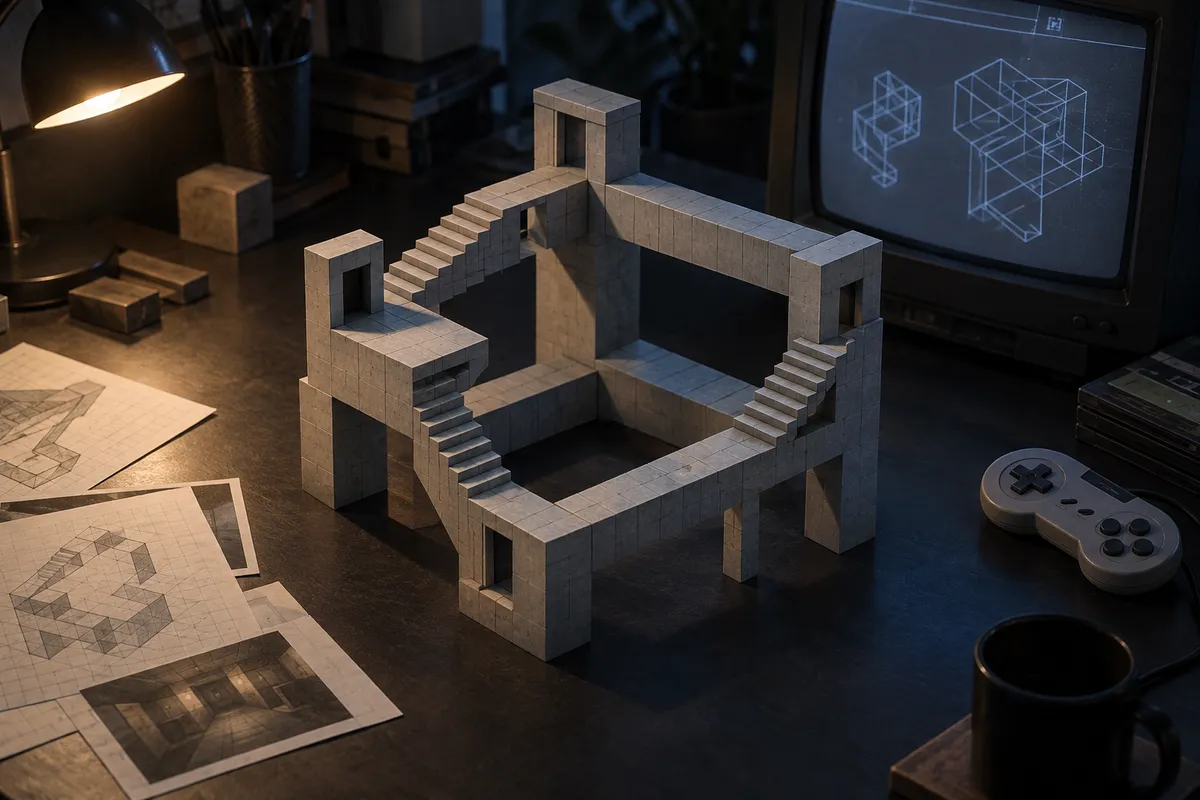
Some game levels are memorable because they're hard. The UFO level in Tomb Raider III is memorable because it doesn't seem to obey the rules of space at all. If you've ever wondered how a game from the era of limited hardware pulled off something that feels mind-bending even now, this is a good case study in how constraints can produce creativity.
A recent piece from Space, which we found via Google, digs into how the level achieved its famously impossible geometry. The coverage centers on the design tricks and technical creativity that made surreal spaces feel playable. I can only speak to that framing here, since the details of the article's specific techniques go beyond what I have in front of me. So this isn't a technical teardown. It's a guide to why the level matters and how to look at it with a designer's eye.
Why impossible spaces work in games
Players tend to trust game spaces. We assume a corridor is a corridor, and that a room that looks one size is that size. Impossible geometry works by quietly breaking that trust while still letting you move, jump and fight as normal.
That last part is the hard bit. A space that is merely confusing is frustrating. A space that is confusing and still fully playable is unsettling in a way that sticks with you. That's a big reason the UFO level still feels memorable, per the framing of Space's coverage.
Constraints as a creative engine
Retro game design is getting renewed attention as players and creators revisit how older hardware produced memorable experiences with limited tools. The UFO level is a strong example of that idea: when you can't brute-force realism, you have to invent.
Modern engines can render vast, convincing worlds, which sometimes makes designers less inclined to ask what the player's brain will accept. Older games had to ask that question constantly. Faking scale, logic and mystery was part of the job rather than a special effect.
How to explore it yourself
If you want to get more from the level than a nostalgia hit, try this:
- Play it slowly. Stop at transitions and ask whether the space you just left could physically sit where the game implies.
- Map it mentally. Try sketching the layout. Where your sketch refuses to close up or make sense, you've likely found one of the level's tricks.
- Notice what the game hides. Impossible spaces depend on what you can't see at once. Pay attention to what is blocked, framed or revealed as you move.
- Compare to a conventional level. Jump into a more ordinary stretch of the game and see what changes in how it makes you feel.
What modern designers and creators can take from it
If you build levels, mods or game-analysis content, the UFO level offers a few durable lessons:
- Player experience beats literal consistency. What the player perceives matters more than whether the layout would survive a blueprint.
- Playability is the anchor. The surreal only works if movement stays reliable.
- Mystery is a design tool. Not explaining a space can be more powerful than rendering it in detail.
For creators, "impossible spaces" is a rich theme. It supports nostalgia explainers, level design breakdowns and sci-fi gaming retrospectives, and it invites comparisons across eras of hardware.
Why it still feels unsettling
My own take: the discomfort comes from the mismatch between your body and your eyes. Your controls behave normally, yet the world around you doesn't add up. A UFO setting is a fitting home for that feeling, since an alien environment shouldn't have to follow human architecture. That's analysis on my part, not a claim from Space's article.
The takeaway
Next time you open a game level, stop trusting the space and start questioning it. Then go find the UFO level in Tomb Raider III and see how long it takes before your mental map gives up. Then read Space's full piece to get the specifics of how it was built.