
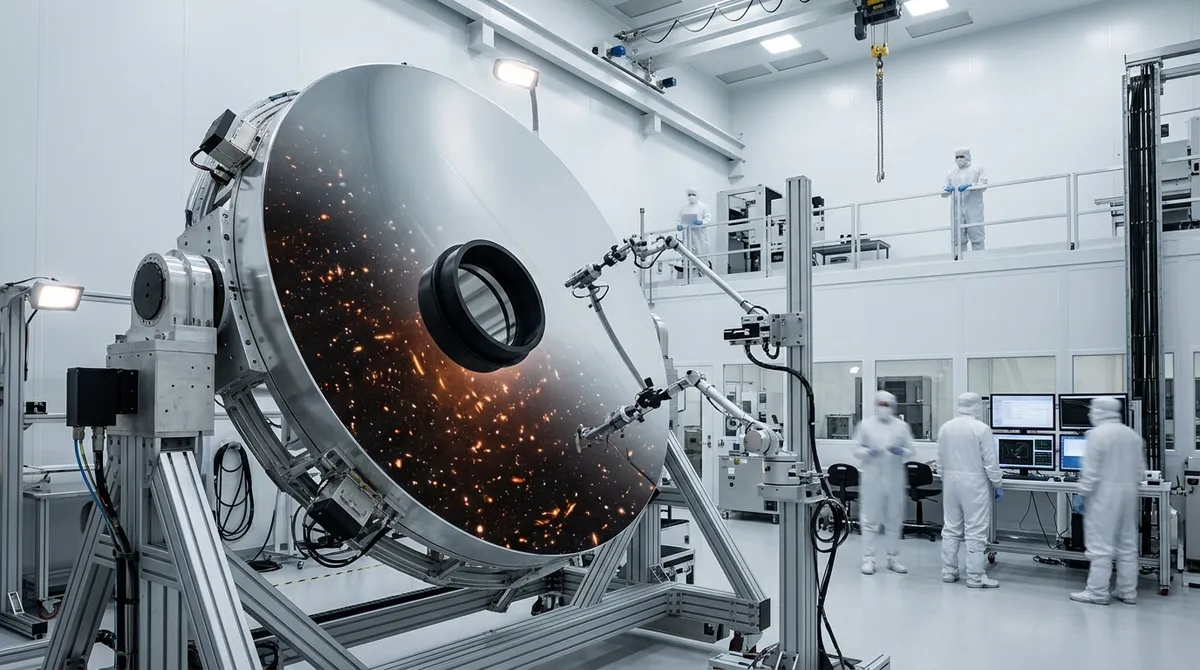
Major Milestone for Space Astronomy
NASA has achieved a significant milestone in space exploration by completing the final inspection of the Roman Space Telescope's primary mirror, according to reports. The 2.4-meter infrared instrument represents a crucial component that will enable groundbreaking observations of the universe once the telescope becomes operational.
The primary mirror features an ultra-thin silver coating that demonstrates the extreme precision engineering required for modern space-based astronomy. According to reports, this coating is hundreds of times thinner than human hair, showcasing the remarkable technical achievements necessary to build such sophisticated astronomical instruments.
Engineering Marvel in Space Technology
The completion of the mirror inspection highlights the decades of development and international collaboration behind this single component. The precision required to build and inspect a mirror with such an incredibly thin coating represents a significant technological achievement in the field of space instrumentation.
The Roman Space Telescope's mirror measures 2.4 meters (7.9 feet) in diameter, positioning it as a substantial piece of astronomical equipment that will contribute to humanity's understanding of the cosmos. The infrared capabilities of this instrument will provide scientists with new tools to explore previously inaccessible regions of space.
Complementing Existing Space Telescopes
According to reports, Roman's infrared capabilities will differ from and complement the James Webb Space Telescope, suggesting that the two instruments will work together to provide a more comprehensive view of the universe. This collaboration between advanced space telescopes represents a new era in astronomical observation and research.
The telescope is designed to tackle some of the most significant cosmic mysteries facing modern astronomy, including investigations into dark energy, the search for habitable exoplanets, and studies of galaxy formation. These research areas represent fundamental questions about the nature and evolution of the universe.
Approaching Launch Readiness
With the completion of the mirror inspection, the Roman Space Telescope is nearing launch readiness, marking a transformative step toward a new era of cosmic discovery. This milestone brings scientists closer to beginning observations that could revolutionize our understanding of space and the universe's fundamental properties.
The telescope's mission will focus on specific cosmic phenomena that have long puzzled astronomers. The study of dark energy, in particular, represents one of the most significant challenges in modern cosmology, and Roman's capabilities may provide crucial insights into this mysterious force.
Impact on Astronomical Research
The Roman Space Telescope represents a major leap forward in space-based astronomy, according to reports. Scientists are particularly excited about the potential for discovering habitable exoplanets and gaining new insights into galaxy formation processes that occurred billions of years ago.
The international collaboration behind the Roman Space Telescope demonstrates the global commitment to advancing our understanding of the universe. The decades of development required to reach this inspection milestone reflect the complexity and ambition of modern space science projects.
Future Observations and Scientific Goals
Once operational, the Roman Space Telescope will begin observations that scientists have been anticipating for years. The infrared instrument's unique capabilities will allow researchers to peer through cosmic dust and observe distant galaxies, potentially revealing new information about the early universe and the formation of stellar systems.
The telescope's ability to study dark energy could provide answers to fundamental questions about the universe's expansion and ultimate fate. Additionally, the search for habitable exoplanets may yield discoveries that could reshape our understanding of planetary systems and the potential for life beyond Earth.
The completion of the mirror inspection brings the astronomical community one step closer to accessing these revolutionary observational capabilities, marking a significant achievement in the ongoing quest to understand our place in the cosmos.