
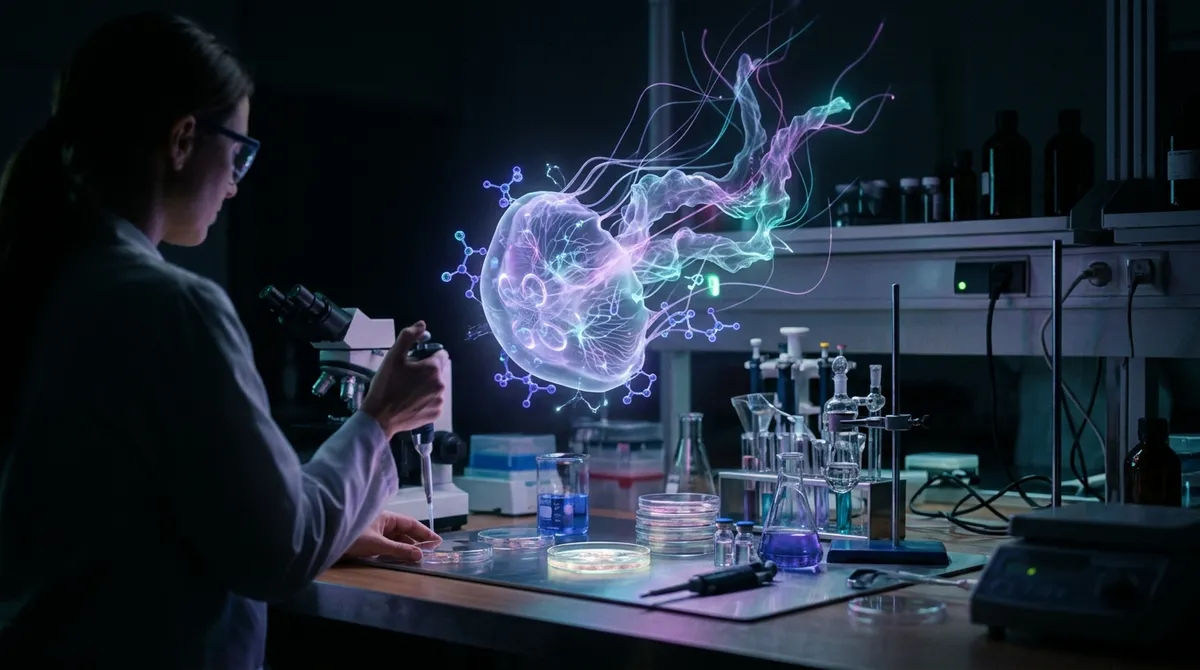
The Rise of AI Scientists
Two groundbreaking "AI scientist" systems are making waves in the research community, promising to accelerate scientific discovery while revealing the fundamental limitations of artificial intelligence in research. Google DeepMind's Co-Scientist and Future House's Robin represent the latest attempt to harness AI's potential for scientific breakthroughs.
According to reports, these systems demonstrate genuine capability in generating hypotheses and identifying promising drug candidates. However, they still depend heavily on human guidance and real-world validation to produce meaningful results.
What AI Scientists Can Actually Do
The current generation of AI scientist systems shows particular strength in several key areas of research. They excel at literature review, helping researchers quickly parse through vast amounts of scientific papers and identify relevant connections. The systems also demonstrate capability in hypothesis generation, offering researchers new angles to explore based on existing data.
Perhaps most promisingly, these AI tools show potential in candidate ranking for drug discovery applications. By analyzing molecular structures and known properties, they can help prioritize which compounds might be worth further investigation.
The Human Factor Remains Critical
Despite these capabilities, the fundamental argument emerging from research into these systems is clear: language-based AI can accelerate parts of science, but cannot replace grounded experimentation or domain-specific models. The systems function more as sophisticated assistants rather than autonomous researchers.
Many of the most exciting discoveries in science involve highly specialized knowledge and making connections between far-flung facts. Scientists must combine deep analysis with broad reasoning strategies—capabilities that current AI systems struggle to replicate independently.
Why Language Alone Isn't Enough
The core limitation of current AI scientist systems lies in their foundation. Language-based AI, while powerful for text processing and generation, provides a weak foundation for true scientific discovery. Science requires more than connecting textual information—it demands understanding of physical phenomena, experimental design, and the ability to interpret real-world results.
This limitation becomes particularly apparent when these systems attempt to move beyond literature analysis into actual experimental design and interpretation. The gap between understanding scientific concepts linguistically and applying them practically remains substantial.
The Double-Edged Sword of Automation
As AI rapidly moves from writing assistance into scientific discovery, the technology brings both excitement about faster breakthroughs and legitimate concerns about research quality. Reports highlight growing worry about lower-quality research outputs, fabricated citations, and unreliable results when AI systems operate without sufficient oversight.
The promise of automated research papers represents both the greatest opportunity and the biggest risk. While AI can help researchers draft and organize their findings more efficiently, the lack of human verification and experimental validation can lead to misleading or incorrect conclusions being published.
Accelerating Drug Discovery
One of the most promising applications for AI scientists appears to be in pharmaceutical research. The ability to quickly analyze molecular structures, predict drug interactions, and identify promising compounds could significantly speed up the typically lengthy drug discovery process.
However, even in this specialized application, human expertise remains essential. Drug discovery requires not just identifying potential candidates, but understanding how they might behave in living systems—knowledge that comes from years of experimental experience and domain expertise.
Looking Forward: Collaboration, Not Replacement
The emerging consensus among researchers is that AI scientists work best as collaborators rather than replacements for human researchers. These systems excel at tasks requiring rapid processing of large amounts of information, pattern recognition across vast datasets, and generating initial hypotheses for investigation.
However, the creative leaps, experimental design, real-world validation, and ethical considerations that define quality science remain firmly in human hands. As multi-agent AI systems become more visible in research settings, understanding these boundaries becomes crucial for both scientists and the public.
The future of AI in science likely lies not in autonomous research systems, but in sophisticated tools that amplify human capabilities while maintaining the critical thinking, creativity, and experimental rigor that drive genuine scientific discovery.